Which Technology Trends Actually Drive SMB Growth?
For a small business ready to move beyond reactive IT, four trends matter most for real growth: artificial intelligence, business analytics, cloud technology and IoT, and integrated software stacks. AI acts as an efficiency multiplier, automating repetitive work and surfacing insight. Business analytics turns the data you already collect into better decisions. Cloud and IoT give you scalable infrastructure and real-time visibility without heavy capital cost. And integrating your software stack stops the productivity drain of disconnected tools. The point isn’t to chase every trend — it’s to adopt the ones that move your business forward, with a technology partner to help prioritize and implement them.
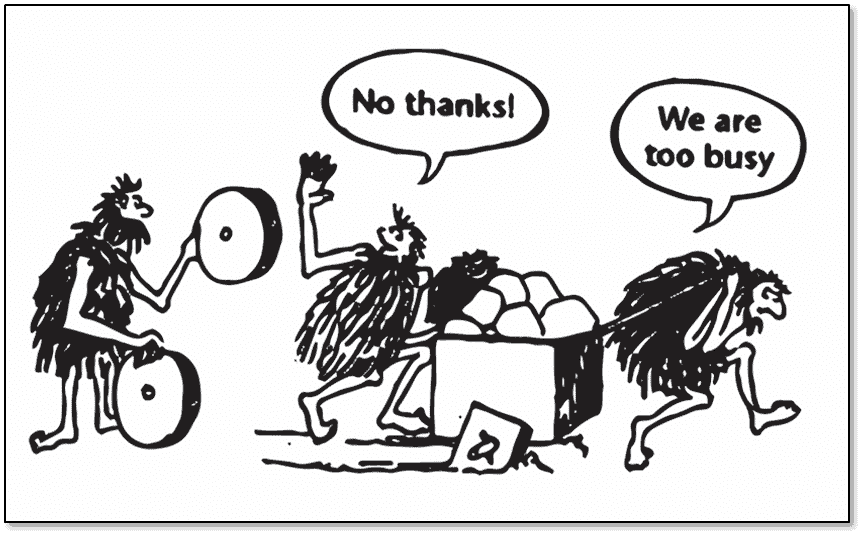
Does the cartoon above hit a little too close to home? As the IT Manager or the go-to tech person in a busy Alberta SMB, it’s easy to get so caught up in the day-to-day—fixing issues, managing systems, supporting users—that there’s barely time to think about working on the business’s technology strategy. But while you’re focused on keeping the square wheels turning, are competitors adopting round ones (or even hoverboards)?
Staying ahead requires strategically embracing innovation. Let’s look at four key technology trends that can help you move beyond reactive support and actively drive efficiency, intelligence, and growth for your company: Artificial Intelligence (AI), Business Analytics, Cloud Technology & IoT, and Integrated Software Stacks.
1. Artificial Intelligence (AI): Your Efficiency Multiplier
AI isn’t just science fiction anymore; it’s a practical toolkit for streamlining operations. For IT leads, AI offers ways to:
- Automate Repetitive Tasks: Free up valuable time by automating routine processes, from basic user support to data entry and system monitoring.
- Enhance Decision-Making: AI tools can analyze operational data to identify patterns, predict potential issues, and provide insights that inform smarter IT investments and strategies. As we know, in practical ways.
- Improve Support: AI-powered tools can assist helpdesks, provide faster answers to common problems, and even enhance cybersecurity threat detection.
2. Business Analytics: Turning Data into Actionable Insight
Your business generates vast amounts of data, but is it being used effectively? Business Analytics tools transform raw data into clear, actionable insights, helping you:
- Optimize Operations: Identify bottlenecks, understand resource utilization, and track key performance indicators (KPIs) across IT and other departments.
- Understand User Behaviour: Gain insights into how employees use technology and how customers interact with your digital platforms.
- Justify IT Investments: Use data to demonstrate the ROI of technology projects and make compelling cases for upgrades or new solutions.
3. Cloud Technology & The Internet of Things (IoT): Real-Time Visibility & Flexibility
Cloud platforms and connected IoT devices offer unprecedented flexibility and insight:
- Enable Remote Work: Cloud-based applications and infrastructure are essential for supporting secure and productive remote or hybrid work environments.
- Real-Time Monitoring: IoT sensors can monitor everything from server room temperatures to equipment performance on a remote site, providing real-time data and alerts to prevent downtime. ( is key here).
- Scalability & Cost Savings: Cloud services allow you to scale resources up or down as needed, often reducing the overhead associated with managing physical hardware.
4. Integrated Software Stacks: Streamlining Workflows
Using a collection of disconnected software tools creates inefficiency and data silos. A well-integrated Software Stack (like a CRM connected to your marketing tools and ) ensures seamless workflows:
- Automate Processes: Connect sales, marketing, and operational tools to automate tasks like lead nurturing, customer onboarding, and reporting. (See our guide on ).
- Improve Data Accuracy: Eliminate manual data entry between systems, reducing errors and providing a single source of truth.
- Enhance Collaboration: Ensure different departments are working from the same information, improving communication and overall business alignment.
Moving from "Busy" to "Strategic"
Adopting these technologies requires careful planning. The goal isn’t just to buy new tools, but to implement solutions that genuinely solve problems, empower your team, and align with your company’s strategic objectives. This is where a partner like Next Step Technology Solutions Provider can help guide your proactive IT strategy.
Your Path to Strategic Technology Adoption
Ready to explore how these trends can specifically benefit your business and make your role more impactful? At Next Step TSP, we guide you through a simple, clear process:
STEP 1: Schedule Your Free Technology Assessment
We’ll start with a conversation focused on understanding your business and its unique operational needs. Then, we’ll identify your biggest technology frustrations and pinpoint opportunities for savings and strategic improvements using these trends.
STEP 2: Get a Customized Plan
We’ll provide a clear, Tech Jargon-free plan that outlines a technology strategy incorporating relevant trends to reduce your costs, increase productivity, and drive business growth.
STEP 3: Eliminate Tech Stress for Good
We’ll execute the plan, handling the implementation and integration, becoming your single point of contact so you can focus on leveraging technology strategically, not just managing it reactively.
Ready to help your business embrace the future and ditch the stone wheel?
to discuss how AI, Analytics, IoT, and integrated software can drive growth for your Alberta SMB.
OR
Frequently Asked Questions: Technology Trends for Growth
We’re busy just keeping systems running — why focus on trends now?
Because staying purely reactive is how businesses fall behind. While you keep the day-to-day going, competitors adopting AI, analytics, and integrated tools pull ahead on efficiency and insight. Setting aside even a little time to work on the technology strategy, not just in it, is what turns IT from a cost centre into a growth lever.
How can a small business realistically use AI?
Practically, not as science fiction. SMBs use AI to automate repetitive tasks, draft and summarize content, triage support requests, and spot patterns in their own data. The wins come from applying it to specific, time-consuming workflows rather than adopting it for novelty — start where it removes the most manual effort.
What’s the benefit of integrating our software stack?
Disconnected tools force staff to re-enter data, switch contexts, and reconcile mismatched information — a constant, hidden productivity drain. Integrating your stack lets systems share data automatically, which reduces errors, speeds up work, and gives you a single reliable view of the business. It is often the highest-ROI move on this list.
How do we decide which trends to adopt first?
Prioritize by business impact, not hype. Look at where your team loses the most time, where decisions are made on guesswork, and where disconnected systems cause friction — then match a trend to that pain. A technology partner can help you sequence adoption so each step pays off before you take the next.