
Mitz Giannakos

Mitz is a Co-Founder and Virtual Chief Revenue Officer at Next Step (NSTSP), bringing over 20 years of executive experience in Telecom and Managed IT to the Alberta market. Specializing in vCIO strategy for the Energy, Construction, and Financial services sectors, Mitz helps SMBs leverage AI and automation to compete with enterprise giants. He partnered with Mark Prescott to build NSTSP on a foundation of 'Customer Intimacy,' driving triple-digit growth by helping local business owners stop fixing computers and start winning bids.

What Digital Maturity is — And Why 77% of Canadian Businesses Are Leaving Money on the Table

What is digital maturity, and how do I know which tier my business is in? Digital maturity is a measure of how effectively your business uses technology — not just what you own, but how well your tools, data, culture, and AI work together to drive results. The Business Development Bank of Canada groups businesses […]


What Digital Maturity is — And Why 77% of Canadian Businesses Are Leaving Money on the Table Read More »

Two lightsabers crossing representing AI Cybersecurity vs AI cyber crime for Alberta businesses.

AI Powered Cybersecurity

AI vs AI: How Alberta Businesses Can Fight Fire with Fire. (without breaking the bank) Key Takeaways from This Episode: The “David vs. Goliath” Shift: AI has leveled the playing field for cybercriminals, allowing them to attack small and medium-sized businesses at an unprecedented scale and speed. Why “Old School” Defense Fails: Traditional antivirus relies

AI Powered Cybersecurity Read More »

Conceptual image representing secure financial data protection and PIPA compliance with digital locks and charts.

Protecting Client Trust: Cybersecurity and PIPA Compliance Essentials for Alberta Financial Firms

What Does PIPA Compliance Require for Alberta Financial Firms? Alberta’s Personal Information Protection Act requires financial firms to protect client personal information with safeguards reasonable for how sensitive it is — which, for financial data, means strong, demonstrable security. In practice that means controlling who can access client data, encrypting it in transit and at

Protecting Client Trust: Cybersecurity and PIPA Compliance Essentials for Alberta Financial Firms Read More »

Conceptual image showing the connection between IT office systems and OT industrial controls in the energy sector, highlighting cybersecurity.

IT/OT Cybersecurity Challenges in Alberta’s Energy Sector: A Guide for IT Leads

What Are the Main IT/OT Cybersecurity Challenges in Energy? The core IT/OT cybersecurity challenge in Alberta’s energy sector is that converging IT and OT environments exposes physical operations — and safety — to network-based threats they were never designed to withstand. Operational Technology (the control systems running field equipment) was built for availability and uptime,

IT/OT Cybersecurity Challenges in Alberta’s Energy Sector: A Guide for IT Leads Read More »

Construction manager using a rugged tablet for project management on an active Alberta job site, demonstrating reliable connectivity.

Solving the Job Site Connectivity Puzzle for Alberta Construction Companies

How Do You Get Reliable Internet on a Construction Job Site? To get reliable internet on a construction job site, combine the right access technologies for the location and layer in redundancy: business-grade cellular or fixed wireless (FWA) as the primary link, satellite for remote sites with no coverage, and a failover connection so work

Solving the Job Site Connectivity Puzzle for Alberta Construction Companies Read More »

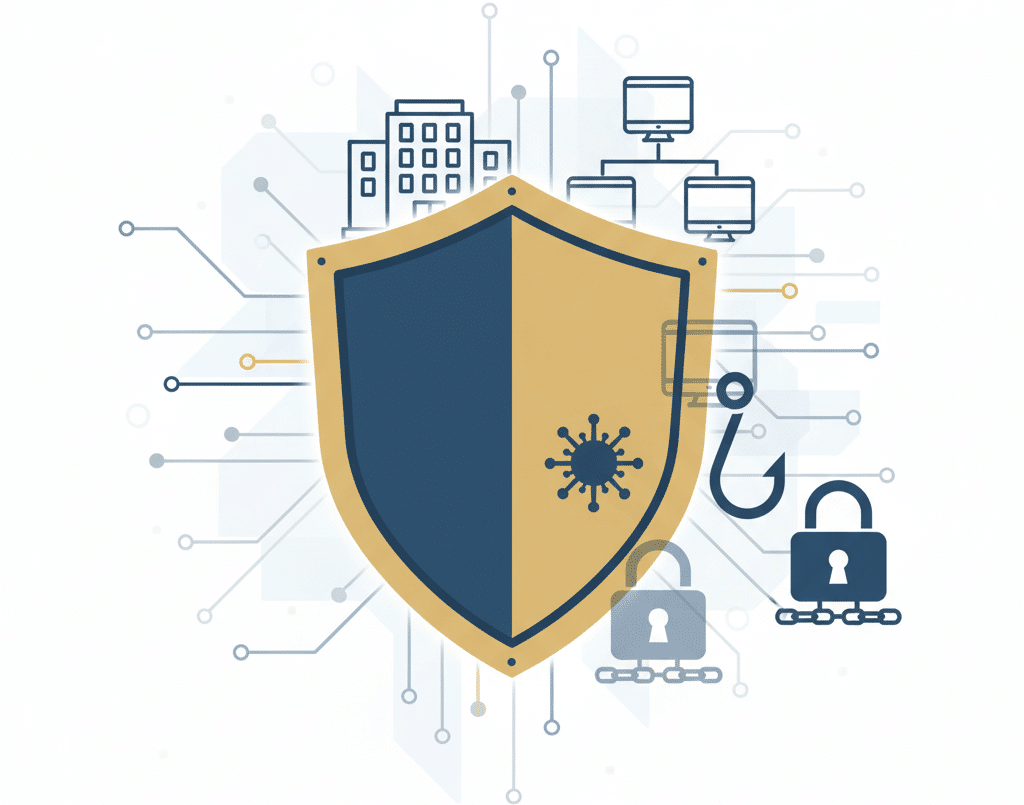
Graphic illustrating a shield protecting an SMB network from cyber threats like viruses and phishing.

Protect Your SMB: 6 Foundational Cybersecurity Measures to Implement Now

What Are the Foundational Cybersecurity Measures for a Small Business? The six foundational cybersecurity measures every small business should implement are: multi-factor authentication (MFA), regular software patching and updates, reliable and tested backups, endpoint protection, employee security awareness training, and a documented incident-response plan. Together these close the gaps attackers exploit most — and they

Protect Your SMB: 6 Foundational Cybersecurity Measures to Implement Now Read More »

gemini generated image sncrgfsncrgfsncr (1)

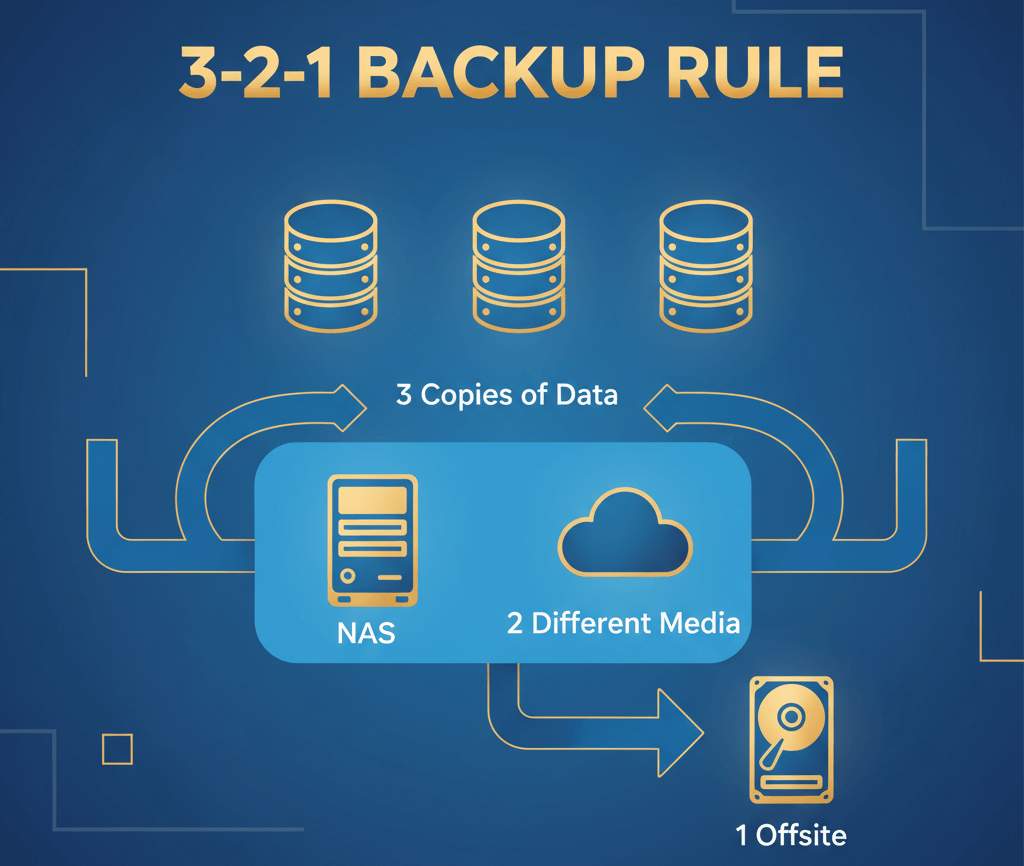
IT Disaster Recovery Planning for SMBs: Mastering the 3-2-1 Rule

What Is the 3-2-1 Backup Rule? The 3-2-1 backup rule is a simple, proven framework for protecting your business data against loss: keep three copies of your data, store them on two different types of media, and keep one copy off-site. The three copies mean your live data plus at least two backups. The two

IT Disaster Recovery Planning for SMBs: Mastering the 3-2-1 Rule Read More »

openart image erejlddu 1761613779731 raw (1)

10 Cybersecurity Essentials for Your Remote & Hybrid Workforce

What Are the Cybersecurity Essentials for a Remote Workforce? To secure a remote or hybrid team, an Alberta SMB needs layered protection across every device and connection — not just one tool. The essentials are: a VPN for encrypted connections, multi-factor authentication (MFA) on every account, endpoint detection and response (EDR) on all laptops, mobile

10 Cybersecurity Essentials for Your Remote & Hybrid Workforce Read More »

Split image showing two men easily holding a heavy block labeled "Business Continuity," contrasting with one man struggling intensely to hold the same block alone.

The Power of Redundancy: Why Every SMB Needs a Backup Internet Plan

What Is Internet Redundancy and Why Do SMBs Need It? Internet redundancy means having a second, independent internet connection that takes over automatically if your primary one fails — so your business keeps running through an outage instead of grinding to a halt. Nearly every critical function of a modern Alberta SMB depends on a

The Power of Redundancy: Why Every SMB Needs a Backup Internet Plan Read More »